


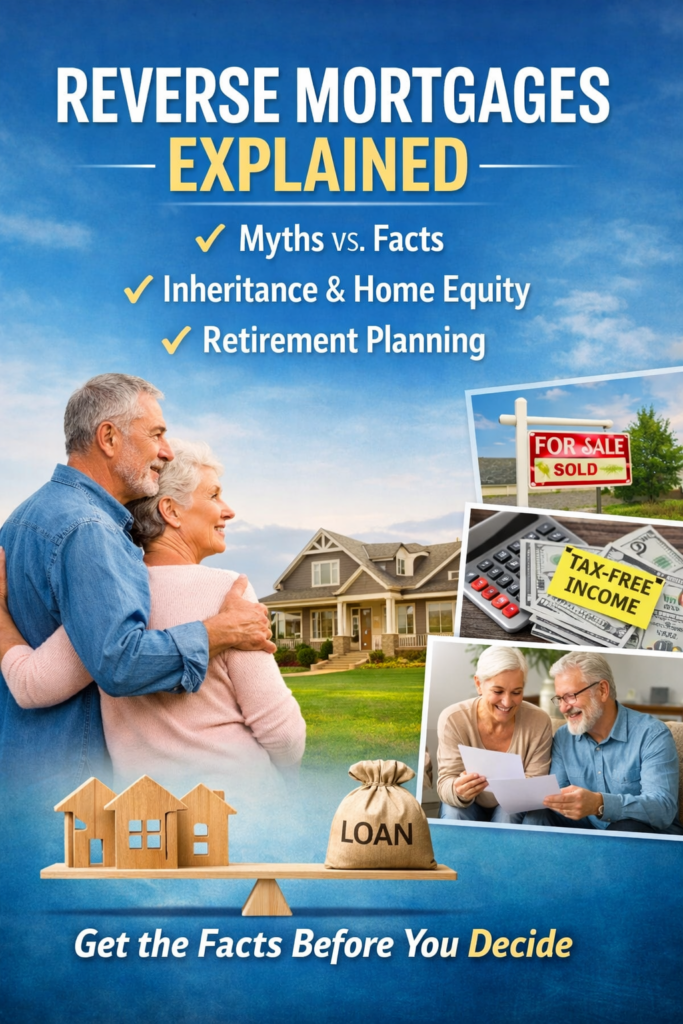
Reverse Mortgages Explained: Clearing Up Common Myths With Facts
Reverse mortgages are one of the most misunderstood financial tools available to retirees today. Outdated assumptions and widespread misinformation often prevent homeowners and their families from even considering them as part of a comprehensive retirement plan.
Let’s be very clear upfront: reverse mortgages are highly regulated — period.
This article isn’t about convincing anyone to choose a reverse mortgage. It’s about sharing accurate, fact-based information so homeowners and families can make informed financial decisions that are right for them.
What Is a Reverse Mortgage?
A reverse mortgage is a government-regulated loan program designed for homeowners age 62 and older that allows them to access a portion of their home equity without monthly mortgage payments.
Instead of making payments to a lender, eligible homeowners receive tax-free funds while continuing to live in and own their home.
Common Reverse Mortgage Myths — and the Truth
Myth #1: “The bank takes your house”
Fact:
With a reverse mortgage, homeownership and title always remain with the homeowner — not the lender or investor.
As long as the homeowner continues to:
- Live in the home as their primary residence
- Pay property taxes and homeowners insurance
- Maintain the property
They remain fully in control of the home.
Myth #2: “My kids will be left with nothing”
Fact:
A reverse mortgage does not automatically leave heirs with nothing.
When the homeowner passes away or permanently moves out of the primary residence, heirs have several options:
- Keep the home by paying off the loan balance (often through refinancing)
- Sell the home, repay the loan, and keep any remaining equity
- Walk away with no personal liability if the loan balance exceeds the home’s value
Reverse mortgages are non-recourse loans, meaning the homeowner or heirs are never responsible for more than the home is worth. Any remaining equity still belongs to the family.
Are Reverse Mortgages Safe and Regulated?
Yes. Reverse mortgages — specifically HECM (Home Equity Conversion Mortgage) loans — are federally insured and highly regulated.
Key protections include:
- Mandatory HUD-approved counseling
- Strict lending and disclosure requirements
- Non-recourse protections for homeowners and heirs
These safeguards exist to ensure homeowners fully understand the loan and are protected throughout the life of the reverse mortgage.
Reverse Mortgages and Retirement Planning
From a retirement planning perspective, reverse mortgages can play a valuable role when used strategically.
Here are several important financial planning benefits many people overlook:
- Reverse mortgage proceeds are tax-free
- Most retirement accounts (401(k)s, IRAs) are taxable when withdrawn
- Home equity is an asset many homeowners have spent decades building through:
- Mortgage principal paydown
- Long-term home appreciation
Accessing that equity tax-free can help retirees:
- Reduce taxable income
- Improve monthly cash flow
- Manage rising living and healthcare costs
- Preserve retirement accounts longer
Most importantly, a reverse mortgage can allow homeowners to age in place, staying in the home they love instead of being forced into costly assisted-living or retirement facilities.
Should Adult Children Be Concerned About Reverse Mortgages?
Bottom line:
Most parents want to enjoy their Golden Years with comfort, security, and dignity — and adult children often want the same for them.
After decades of hard work, homeownership, and financial responsibility, a reverse mortgage can be one way to turn home equity into a better quality of life in retirement — while still protecting heirs.
Real-Life Reverse Mortgage Examples
Here are a few real-world situations where reverse mortgages have successfully solved financial challenges for homeowners over 62:
1. Buying a Second Home Near Family
Some clients used tax-free reverse mortgage funds to purchase a second home outright in another state so they could split time near adult children and grandchildren. With no monthly mortgage payments, their ongoing costs were limited to taxes, insurance, maintenance, and HOA fees.
2. Remodeling a Long-Time Home
Other homeowners accessed funds to address deferred maintenance, leading to full remodels that allowed them to enjoy modern comforts while remaining in their home.
3. Eliminating Debt in Retirement
Some clients used reverse mortgages to pay off burdensome debt — often accumulated while helping family members — freeing them from financial stress and restoring peace of mind.
4. Eliminating Monthly Mortgage Payments
In other cases, clients simply needed their existing mortgage to go away so they could live comfortably and reduce the tax exposure created by withdrawing from retirement accounts.
There are many financial challenges people over 62 face, and when used appropriately, a reverse mortgage has successfully addressed many of them.
Final Thoughts: Making an Informed Decision
A reverse mortgage isn’t right for everyone — and it shouldn’t be.
But it is a legitimate, regulated financial tool that deserves to be evaluated using facts, not fear or misinformation.
I’m always happy to have a respectful, fact-based conversation and review all financial options with my clients so they can make informed decisions that are best for their family and long-term financial goals.
